About
Ciao! I'm Alberto Schiabel, known as @jkomyno online.
/al'bɛrto ski'abɛl/
I build the infrastructure coding agents run on: CLIs, SDKs, and the tool-calling layer between a model and the systems it acts on. Today that's at Composio, before that four years inside Prisma's engines. Under the software there's a mathematician who never quite left: optimization, probability, and machine learning are where I go when a problem stops being an engineering problem.
I've been shipping things people paid for since high school, and working remotely since 2016. On paper I'm a contractor. In practice I'm on your team.

Track record
- 2026
Embracing AI engineering
In January I wired Claude Code hooks into tmux and Telegram, so I could steer long-running agents on my laptop from my phone. I called it claudegram, and it predates the wave of remote-control tools that followed. I built some of the playground tools on this website with AI assistance, and I finally had the push to write my dotfiles from scratch, with custom skills and a pi.dev harness. I experimented with local-first models along the way. I'm now setting time aside to build a collection of solid, fast data structures, so my agents have less room to write slop.
- 2025
Wrote Composio's CLI from scratch
Composio's CLI is Effect and Bun, written by hand before I had an LLM subscription. New joiners still send me compliments about it. I was the first to bring Effect into the company, and every new TypeScript project there uses it now. I'm also leading the TypeScript and Python SDKs to v1.
- 2024
Effect Days, first edition
I went to Vienna for the first Effect Days. I had come to Effect from fp-ts, whose author had joined the team the year before. I left knowing how I wanted to write TypeScript from then on.
- 2023
Scheduled fuel pipelines for the Czech Ministry of Energy
My former MSc thesis advisor, Jakub Mareček, brought me into a part-time contract with the Czech Technical University in Prague. He knew I had built database ORMs, and he knew I cared about the unjustified Russian invasion of Ukraine, which had sent energy prices surging in his home country. It joined the warehouse route optimizer I had built for a manufacturer near Venice as my second mathematical optimization project outside academia.
- 2022
Joined Prisma, my first paid open-source job
That year I also started speaking at tech events. At Prisma I ported millions of lines of legacy Rust to WebAssembly through two architectural shifts, so the ORM could run outside Node.js, on Cloudflare Workers among others. Driver Adapters went from prototype to GA on my watch. I went through 6 different engineering managers in 4 years, in a team that ranged from 12 to 2 people, and experienced higher levels of bureaucracy than I would've hoped. As a goodbye gift, I later brought lessons from Composio's greenfield CLI back into Prisma 8.
- 2021
MSc in Computer Science, top 1% of the class
University of Padua, specialization in Machine Learning and Software. I did it while working, commuting 150 km a day, and nursing my father through Covid when he couldn't get out of bed. He's fine now. My thesis on lattice submodular maximization was a collaboration with CTU Prague, and the seminar paper is on arXiv. If you'd rather skip the PDF, I wrote a series introducing submodularity for this site.
- 2020
Lost an Erasmus, shipped an interpreter
Covid cancelled my semester at Leiden University, where I wanted to take Automated Machine Learning. I stayed in Padua and wrote whileplus, a semantics-driven interpreter in Haskell, for my Software Verification course.
- 2017
Co-founded Skydreamer at 19
A swipe-and-match app for traveling with friends, shown at TechCrunch Disrupt. I taught our designer TypeScript and React Native and ran my first remote interviews. It crashed and burned within months, as first startups tend to do.
- 2016
Sold a second app, reached the RoboCup national finals
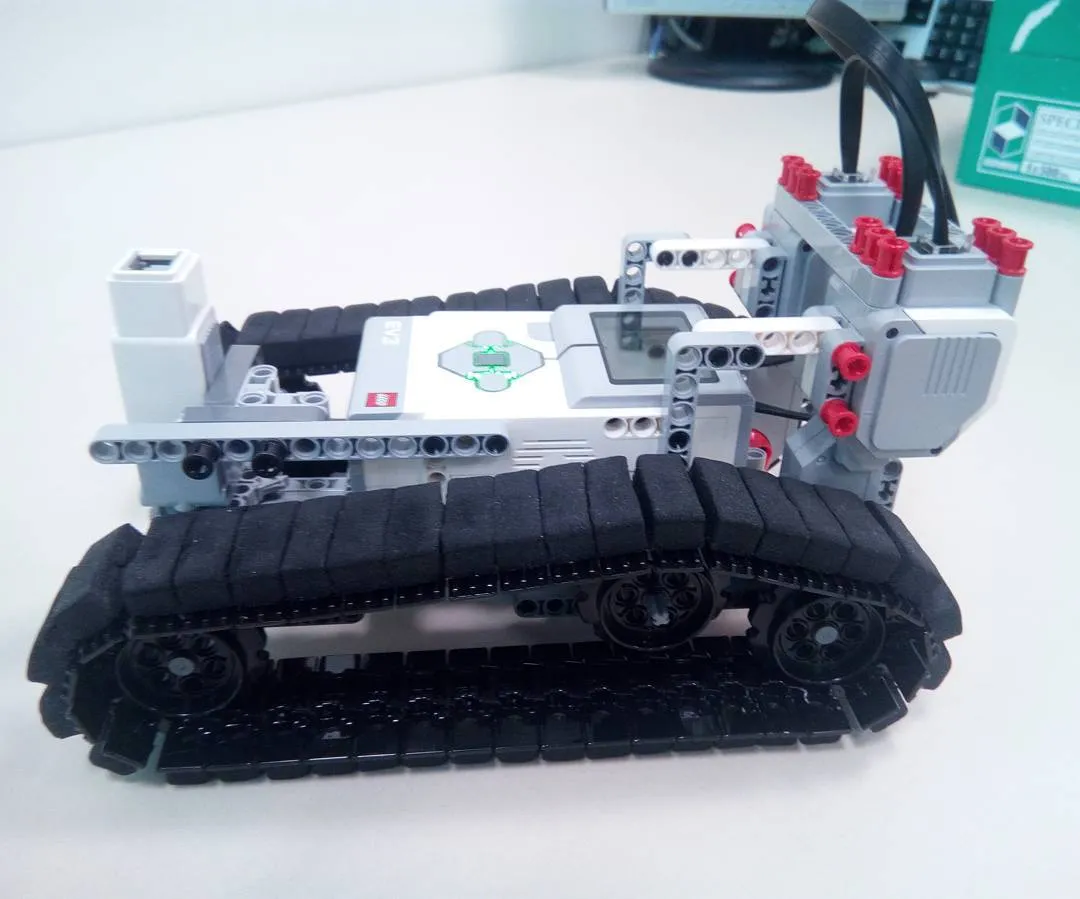
Both with Simone Simonella, still in high school. The app taught road rules with a quiz and a game. Simone built the game in Unity to play the quiz concepts out on a street map, I built the quiz and the C++ glue that merged the two into one APK. Our Lego EV3 robot navigated a rescue maze and reported victims. Mapping the maze is a graph traversal problem, and the controller allowed no dynamic memory allocation, so the graph had to fit in fixed-size arrays sized before we knew the maze. That was my first encounter with graph algorithms under real memory constraints.
- 2015
Sold my first app, solo, in high school
A scheduling app for the blood donor volunteers in my town. The same year I started writing for Androidiani.com: 300+ articles for 100,000 monthly readers, and the first review deals in Italy with Oppo and other Chinese phone brands Europe hadn't heard of yet.
Two roots
Software
TypeScript, Rust, and Effect. Developer tooling has been the core of my last five years, first for humans, now for agents too. Local-first is where my sympathies lie: the Postgres playground here runs a real database in your browser.
Mathematics
Combinatorial and probabilistic optimization, and machine learning. The thesis, the pipeline scheduling, and the PII model trained for this site come from the same habit of reaching for a proof before reaching for a library. My first program was Turbo Pascal solving my geometry homework at twelve, on the Olivetti M24 my father kept upgrading.
How I work
- Remote since 2016, from Tbilisi most of the year, with overlap across US and EU time zones. I fly to offices, offsites, and conferences at least twice a year.
- New engagements start with a two-week trial: long enough to ship something real in your codebase, usually enough for both sides to know.
- One primary customer at a time, plus a side quest. Async updates, design docs, and frequent demos over standing calls.
Contact
Email alberto.schiabel@gmail.com or book a call. To check whether I can explain things before paying me to build them, start with my talks or the post about barcode scanners.